
Antimicrobial Wipes vs Food Service Wipes: What’s the difference?
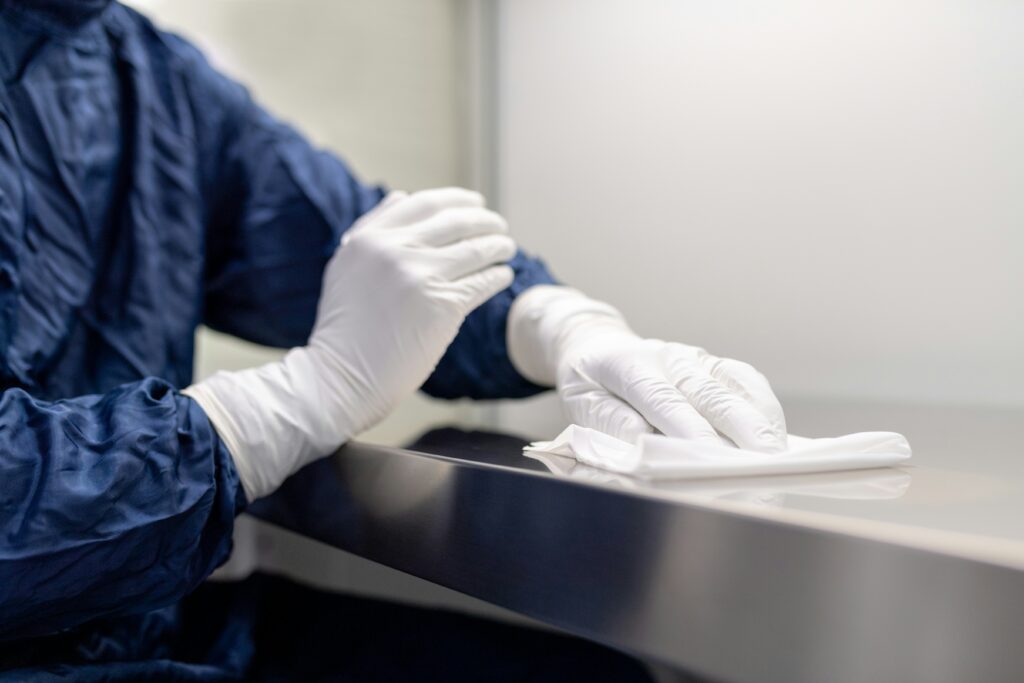
Key Takeaways : Food service wipes are an economical choice for everyday tasks like wiping tables, counters, and spills. Antimicrobial wipes are better suited for heavier, frequent cleaning while helping the wipe stay fresh and odor-free. Both wipes can work together, with different types or colors assigned to specific cleaning zones and tasks. In foodservice environments, not every wiping task requires the same type of wipe. A restaurant kitchen, bar, cafeteria, or hospitality operation may need wipes for everything from cleaning up spills and wiping countertops to handling heavier, more frequent cleaning throughout the day. That’s where choosing the right wipe matters. Two common options are food service wipes and antimicrobial wipes. Both are designed for foodservice and hospitality environments, however, they serve slightly different purposes. So, what’s the difference between antimicrobial wipes and food service wipes—and which one is right for your operation? What Are Antimicrobial Wipes? Antimicrobial wipes are designed with antimicrobial properties that help inhibit the growth of microorganisms within the wipe itself. The EZPZ EZF150WQ Antimicrobial Wipe, for example, is designed to help prevent bacterial growth and keep the wipe fresh and odor-free even after repeated use. It has a 20″ x 13″ sheet size in blue and white color options. It also comes quarter-folded for easy dispensing. Antimicrobial wipes are particularly useful when wipes are being used frequently throughout the day and need to remain fresh between uses. The EZPZ antimicrobial line is designed for foodservice and hospitality applications, including food prep areas, commercial kitchens, bars, and tabletop cleaning. The wipes are intended for heavier wiping tasks than the standard food service wipes. Antimicrobial wipes are a good fit for: Heavier-duty wiping tasks Food prep areas Commercial kitchens Bars Tables and countertops High-frequency cleaning environments Applications where odor control and freshness are important Why Are Food Service Wipes? Food service wipes are designed for everyday cleaning tasks in restaurants, bars, kitchens, and other foodservice environments. They provide a reusable, economical alternative to traditional bar mops and rags. For example, the EZPZ EZF200PQ Food Service Wipe is designed for light-duty, everyday cleaning. It comes in pink and blue. Its 20″ x 13″ size makes it suitable for wiping down counters, food prep areas, and front-of-house tables. The wipe can be rinsed and reused multiple times before being discarded. The EZF200PQ is also designed with a cloth-like, low-lint construction, making it a practical replacement for traditional bar mops that require regular laundering. Food service wipes are a good fit for: Wiping countertops and prep areas Cleaning tables and other front-of-house surfaces Managing everyday spills General kitchen cleanup Replacing reusable bar mops and rags For operations that need an economical wipe for routine cleaning throughout the day, food service wipes can be a simple and practical solution. Antimicrobial Wipes vs. Food Service Wipes: Key Differences At first glance, these wipes can seem very similar. Both are 20″ x 13″, quarter-folded, reusable during the day, and designed for foodservice environments. The biggest difference comes down to the level of cleaning and the properties built into the wipe. Feature Food Service Wipes Antimicrobial Wipes Primary use Everyday cleaning Heavier, frequent cleaning Typical applications Counters, prep areas, tables Prep areas, kitchens, bars, tables Antimicrobial properties No Yes Reusable during the day Yes Yes Size 20″ x 13″ 20″ x 13″ Fold Quarter-folded Quarter-folded Colors Blue & White Blue & Pink Alternative to bar mops Yes Yes Sheets per box 200 150 The EZF200PQ contains 200 sheets per box, while the EZF150WQ contains 150 sheets per box. Which Wipe Should You Choose? The right choice depends on the cleaning demands of your operation. Choose antimicrobial wipes for heavier, frequent wiping. If your operation puts more demands on its wipes or you’re looking for a wipe with antimicrobial properties, antimicrobial wipes may be the better fit. The EZF150WQ is designed for heavier wiping tasks and incorporates antimicrobial properties intended to inhibit microbial growth within the towel and help keep it fresh and odor-free during use. Choose food service wipes for everyday cleaning. If your team primarily needs an economical wipe for wiping down tables, counters, prep areas, and other surfaces throughout the day, food service wipes are a practical choice. The EZF200PQ is designed specifically for light-duty, everyday cleaning and can be rinsed and reused multiple times before disposal. It’s Not Always About Choosing One Food service wipes and antimicrobial wipes don’t necessarily need to compete with each other. Many foodservice operations have different cleaning zones and different wiping needs throughout the day. A restaurant could use standard food service wipes for routine table and counter cleaning while stocking antimicrobial wipes for areas that require heavier or more frequent wiping. Color-coded options can also help organize wiping systems and separate cleaning tasks. EZPZ offers both food service and antimicrobial wipes in multiple color options. The goal isn’t simply to find the “best” wipe. It’s to match the wipe to the job. The Bottom Line Food service wipes are built for economical, everyday cleaning in foodservice environments. They’re a practical alternative to traditional bar mops and rags and can be reused throughout the day. Antimicrobial wipes offer additional antimicrobial properties and are designed for heavier, frequent wiping where keeping the wipe fresh during use is an important consideration. Both can play an important role in a professional cleaning program. The best choice depends on your application, cleaning frequency, and the level of performance you need from your wipe. Looking for the right wipe for your foodservice operation? Explore EZPZ Brands’ food service wipes and antimicrobial wipes to compare your options and find the right fit for your customers or facility.
Blue Shop Towels vs. Heavy-Duty Disposable Wipes: Which Should You Use?
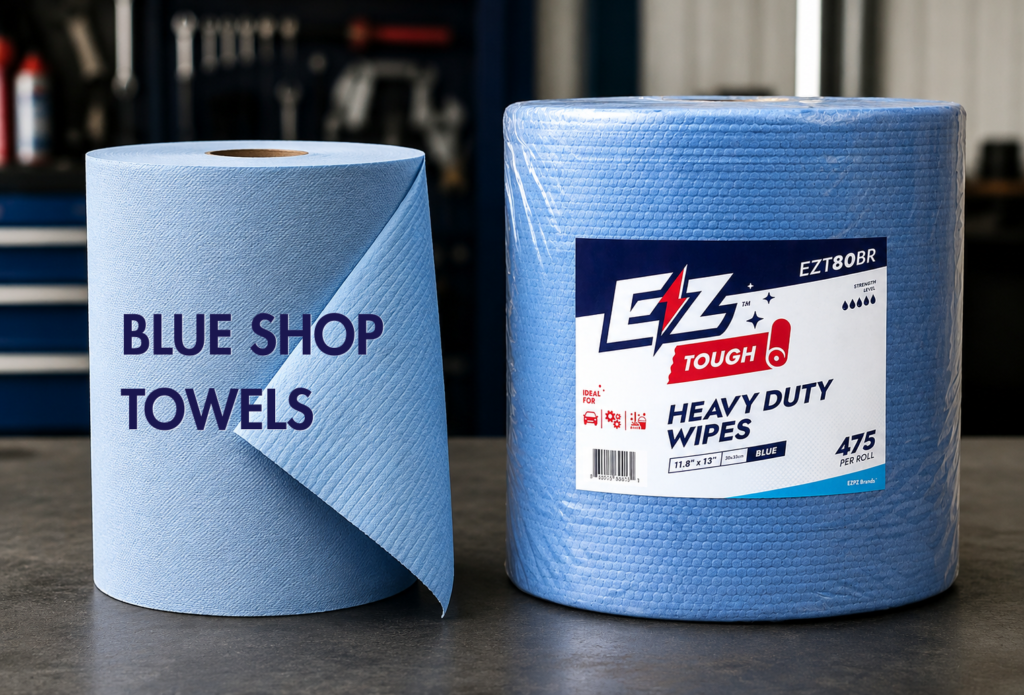
Key Takeaways : Blue shop towels work well for everyday jobs like oil, grease, and general cleanup. Heavy-duty wipes are better for demanding tasks requiring strength, low lint, or solvent compatibility. The best approach is to use the right wipe for the job instead of relying on one product for everything. Walk into almost any garage, automotive shop, or manufacturing facility, and you will likely find a roll of blue shop towels nearby. They are convenient, familiar, and useful for everything from checking oil to wiping grease off tools. But are standard blue shop towels strong enough for every job? And when does it make sense to step up to a heavy-duty disposable wipe? A recent discussion among mechanics raised an important point: most shops do not need to choose one wiping product for every task. Blue shop towels, reusable rags, and heavy-duty disposable wipes each perform best in different situations. What Are Blue Shop Towels? The term “blue shop towels” can refer to several different products: Disposable blue paper shop towels sold in rolls Laundered blue cotton towels supplied through a rental service Blue nonwoven industrial wipes made from materials such as spunlace Although these products may look similar, their performance can be very different. Material, thickness, construction, and absorbency determine how well a towel handles oil, solvents, metal surfaces, and repeated scrubbing. Standard disposable blue shop towels are typically stronger and more absorbent than household paper towels. They are commonly used for automotive maintenance, grease, oil, fluids, and general garage cleanup. Why Are Blue Shop Towels So Popular? Blue shop towels offer a practical balance of strength, portability, and convenience. They handle oil and grease better than ordinary paper towels Household paper towels are designed primarily for light spills and everyday cleaning. When used with oil, grease, or automotive fluids, they may quickly become saturated or begin to fall apart. Blue shop towels are generally more durable when wet, making them better suited for: Changing oil Checking and refilling fluids Cleaning greasy tools Wiping hands during repairs Handling small automotive spills General workbench cleanup They are easy to identify The blue color helps distinguish shop towels from products used in restrooms, kitchens, or other areas of a facility. Color coding can also help operations assign different wipes to different tasks. However, color alone does not indicate a towel’s material, strength, or intended application. Buyers should always review the product specifications. They are convenient Disposable rolls can be placed on standard dispensers, tool carts, workbenches, or inside service vehicles. Workers can take the number of sheets they need and discard them after use. That convenience is especially valuable when a clean towel is more important than reusing the same rag throughout the day. Where Standard Blue Shop Towels Fall Short Blue shop towels are versatile, but that does not mean they are the best choice for every job. A mechanic participating in the Reddit discussion explained that disposable wipes were preferred for cleaning tools, safety glasses, mirrors, sealing surfaces, and engine parts because the shop’s laundered rags sometimes came back greasy or contained small pieces of metal or glue. That distinction matters. A towel used to wipe a dipstick does not have to meet the same requirements as one used to prepare a sealing surface. Precision cleaning For delicate parts, glass, polished metal, or surfaces being prepared for paint, sealant, or adhesive, lint and residue can create problems. A low-linting heavy-duty wipe is often a better choice for: Preparing engine components Cleaning sealing surfaces Wiping parts before assembly Applying or removing solvents Cleaning safety glasses and mirrors Preparing surfaces for paint or adhesive Scrubbing rough surfaces Some paper-based blue shop towels can tear when used repeatedly on bolts, unfinished metal, sharp edges, or textured machinery. A stronger nonwoven wipe is more suitable when the job requires pressure and repeated scrubbing. Large spills Neither blue shop towels nor premium disposable wipes are necessarily the most economical way to absorb a large spill. Absorbent pads, granular absorbents, or dedicated spill-control products may be more appropriate. Using the right product for the size and type of mess helps control wiping costs. Blue Shop Towels vs. Laundered Shop Rags Reusable cotton shop rags remain common because they are durable and familiar. They can be a reasonable option for wiping up large amounts of grease or handling rough, noncritical cleaning jobs. The concern is consistency. A commercially laundered rag may look clean without being suitable for every surface. Depending on how it was collected, processed, and inspected, it could retain grease, metal fragments, adhesive, chemicals, or other contaminants from a previous use. That does not mean reusable rags have no place in a shop. It means they should not automatically be used for every task. A simple division works well: Cleaning task Better option General hand and tool wiping Blue shop towels Small oil and fluid spills Blue shop towels Large, rough cleanup jobs Reusable rags or spill-control products Sealing surfaces and engine parts Clean, low-lint disposable wipes Solvent application Solvent-compatible heavy-duty wipes Glass, mirrors, and safety glasses Low-lint wipes Rough machinery and repeated scrubbing Heavy-duty nonwoven wipes When Heavy-Duty Disposable Wipes Make More Sense Heavy-duty nonwoven wipes are designed for jobs requiring greater strength, absorbency, or cleanliness than a standard shop towel can provide. Spunlace wipes, for example, are made by entangling fibers with high-pressure water. This creates a cloth-like material that can remain strong while wet and withstand more aggressive cleaning. They are particularly useful when: The wipe must not fall apart during use Lint could interfere with the finished surface A fresh, uncontaminated wipe is required Workers are cleaning oil, grease, ink, or solvents One stronger wipe could replace several lighter towels The operation needs more consistent performance than rental rags provide EZPZ Brands’ blue low-linting spunlace shop towels are designed for industrial cleaning and offer greater water and oil absorption than traditional textile shop rags. For more demanding scrubbing and machinery cleaning, EZT80BR heavy-duty wipes provide another blue shop
Which Wipes Should You Recommend for Glass Cleaning?
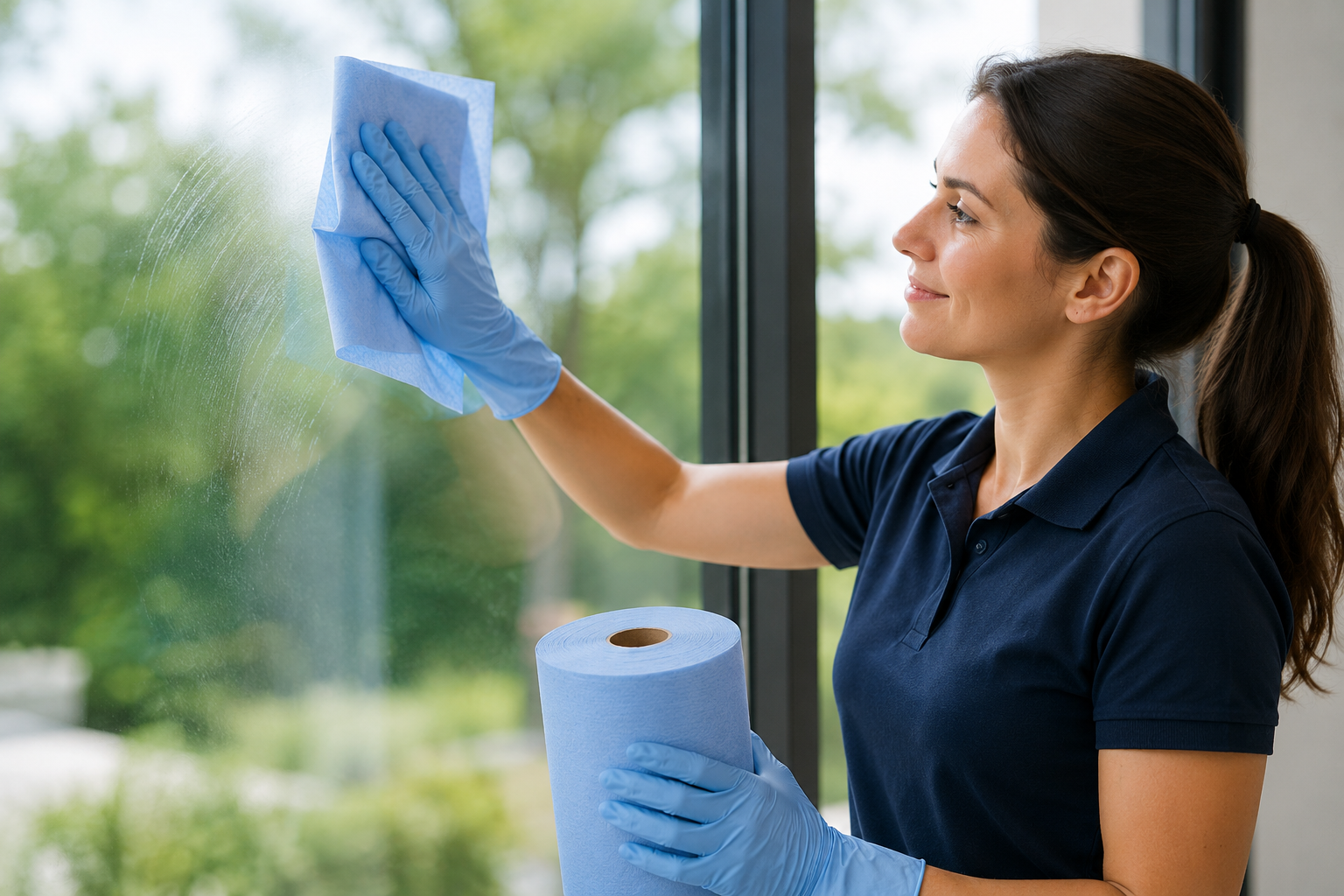
Key Takeaways : “It leaves streaks and lint” is a material problem. The wrong wipe doubles the work. Sontara-like wipes leave virtually no fibers behind, exactly what glass demands. Dust cloths are single-use. Reusing them puts the lint right back on the window. A Material Guide for Distributor Sales Reps Your customers who buy glass cleaning supplies keep asking the same question: which wipe actually works for glass and window cleaning? On a spec sheet, most options look like they could get the job done .They might all look capable of handling the tedious task of cleaning glass and windows. A recommendation is made, the product ships, and inevitably, the complaints come back. “This does an okay job but leaves streaks and lint behind.” “It doesn’t completely wipe off the excess glass cleaner.” The issue usually isn’t the glass cleaner or the technique. It’s the wipe material. And knowing the difference is what separates a distributor who can spec a solution from one who just ships what’s on the shelf. Wipe material determines everything, not all wipes are created equal. The type of material used to make a wipe determines its fiber construction, absorbency, wet and dry strength, and low-linting performance. This means that efficiency in different applications may vary. That said, a wipe that excels in one application may fail in another. Airlaid wipes, for example, are excellent for non-surgical medical applications because of their softness, but apply it on a solvent-soaked window and it gets soggy, loses its shape, and easily tears under friction. Glass is less forgiving in cleaning. Every streak, lint fiber, and missed spot shows. Here’s what you need to know to get it right . Materials For Cleaning Glass and Windows Sontara-like (Low-Lint)Wipes Sontara-like wipes, a type of spunlace, are generally considered the premium tier of disposable wipes. During manufacturing, the fibers are entangled with water jets using hydraulic technology and repeatedly washed during production. This result is a wipe that leaves virtually no fibers behind. For your customers cleaning glass windows, storefronts, mirrors, or display cases, this is the spec. . Spunlace wipes are strong wet or dry, can handle glass cleaners and solvents, and are durable enough to be washed and reused across multiple cleaning cycles. Pre-Treated Yellow Dust Cloths Yellow dust cloths are the finishing tool. A quality dust cloth is usually pre-treated to lift and pick up lingering lint, moisture or cloudiness after wet wiping. They work by trapping fine debris and absorb residual moisture quickly. This is what turns a “pretty clean” window into a streak-free one. One thing to make clear to your customers: these are single-use, dry-dusting products. Reusing them transfers residue and lint back onto the surface. The Method Matters Too Aside from the wipe used in cleaning windows, sequence matters. After the standard dry brushing, vacuuming, and scrubbing, dry wipes are usually the last step. Rushing it is what results in the callbacks. Start off with the EZTSCBI, an interfold/pop-up high-strength disposable spunlace wipe that absorbs more water and oil than traditional textile shop rags. The EZTSCBR and EZTSCBQ are also options that are made with Sontara-like technology. The EZTSCBR is made in a roll format while the EZTSCBQ comes in a quarter folded format. They expertly remove fingerprints, grime, oil, and dirt from glass windows. They can be used in both wet and dry states. Finish off with EZPZ’s pre-treated yellow dust cloth to remove any excess moisture and leave the window completely streak-free. Stock It Without the Risk And when your customers are asking about wipes for glass cleaning, you don’t need to commit to a container load to find out what sells. EZPZ Brands keeps these wipes stocked with 1-pallet minimums and roughly 2-week lead times. Want pricing or spec sheets for the EZTSCB line or the EZT16YF? Reach out and we’ll get back to you within 24 hours.
How to Prep Surfaces for Painting or Coating the Right Way

A quality finish starts well before the first coat of paint is applied. We see our dry wipes used to prep surfaces mostly in industrial and manufacturing settings, so that’s what we’ll cover today. Think refinishing equipment, coating machinery components, or maintaining facility infrastructure. In all of these cases, surface prep is the step that determines whether your work holds up or fails prematurely. Skipping it (or doing it halfway) is one of the most common reasons coatings peel, bubble, or lose adhesion ahead of schedule. This guide covers what proper surface prep looks like in industrial settings and why the right dry dusting cloth can make a big difference. Why Surface Prep Matters More Than Most People Think Paint and protective coatings are engineered to bond with clean, dry, particle-free surfaces. Even a thin layer of dust, lint, or fine debris can compromise that bond, leading to adhesion failures, uneven finishes, and doing the job over. In a manufacturing environment, machinery and equipment see very heavy use. So a coating that fails, fails early. The problem is that surface contamination is not always visible to the naked eye. Dust and fine particulates that settle on equipment or components between shifts can be hard to see. That’s why the prep stage needs to be thorough & use the right tools. The Right Order of Operations: Effective surface prep in industrial settings generally follows this sequence: Remove loose debris and dust first, using a dry dusting cloth Follow with any required degreasing or solvent cleaning for oily or contaminated surfaces Allow surfaces to dry completely before sanding or abrading if required Do a final dry wipe before applying any coating to remove particles stirred up during earlier steps Dry dusting always comes first. Applying a wet cleaner or solvent to a dusty surface without removing loose particles first can push contamination into the surface rather than removing it, creating more problems than it solves. Why Low-Lint Matters in Coating Prep Not all wipes and cloths are created equal when it comes to surface prep. Standard rags and shop towels can shed fibers during use, leaving lint behind on the surface you just cleaned. Those fibers get trapped under the coating and show up as texture defects or weak points in the finish. Pre-treated dust cloths are the better choice for prep work. EZPZ Yellow Dust Cloths are engineered to lift and trap dust, lint, and fine debris rather than redistributing it, and their low-lint construction means you are not introducing new debris in the process of removing old debris. Where Our Customer-Favorite Dust Cloths Fit Into Your Workflow EZPZ Yellow Dust Cloths are pre-treated for dry use. Use them to: Clear dust and fine debris from machinery and components before applying degreasers or solvents Do a final wipe of prepped surfaces immediately before painting or coating to remove any particulate that settled during earlier prep steps Maintain clean work surfaces and equipment between coating jobs in high-traffic facilities Order High-Quality Dust Cloths & Wipes Cutting corners on surface prep is rarely worth it. We deliver dust cloths that get the job done right the first time. For over five decades, EZPZ Brands has built its reputation on quality, consistency, and customer-first flexibility. What started as a family rag business in 1968 has evolved into one of the nation’s premier dry wipe manufacturers. If you’re an end-user looking to order less than a pallet, let’s connect you with a distributor. If you’re a distributor looking to stock high-quality dust cloths and dry wipes, fill out an application. EZPZ wipes are easy to stock, quick to sell, and available with training for your sales team. Hear back about your application within 1-2 business days.
Dry Dusting vs. Wet Wiping: When to Use Each in Your Facility

Choosing the wrong cleaning method for the job leaves surfaces streaky, pushes debris around instead of removing it, or even damages equipment. Understanding when to dry dust and when to wet wipe is one of the easiest ways to improve your cleaning routine and get better results with less effort. What Is Dry Dusting? Dry dusting uses a pre-treated or dry cloth to lift and trap loose particles like dust, lint, and fine debris from surfaces without introducing any moisture. The goal is capture and removal, not scrubbing. Pre-treated dust cloths, like EZPZ Yellow Dust Cloths, are engineered specifically for this purpose, using a treatment that attracts and holds particles rather than simply pushing them from one spot to another. Dry dusting works best when: Surfaces are not visibly soiled or greasy You are cleaning electronics, screens, or sensitive equipment You are prepping a surface before painting, coating, or finishing You need to maintain cleanliness in retail displays, hotel lobbies, or other appearance-sensitive environments You are performing routine dusting in industrial or commercial spaces What Is Wet Wiping? Wet wiping involves applying a cleaning solution, either directly to the surface or to the cloth, to break down grease, grime, bacteria, or stubborn residue. It is the right choice when dry dusting alone would not fully remove what is on the surface. Wet wiping works best when: Surfaces have visible grease, food residue, or sticky buildup Sanitation is required, such as in food prep areas or restrooms You are cleaning high-touch surfaces that need disinfecting Spills or liquid messes need to be absorbed and removed Why the Order Matters In most facilities, dry dusting and wet wiping are sequential steps. Dry dusting first removes loose particles so that wet wiping can do its job more effectively. Skipping the dry dusting step and going straight to a wet cloth can turn dust into a muddy residue that is harder to clean and more likely to leave streaks or buildup behind. This is especially important in industrial maintenance, auto detailing, and surface prep work, where even small amounts of trapped debris can interfere with coatings, finishes, or equipment performance. Choosing the Right Cloth for Each Job For dry dusting, look for a pre-treated cloth with a large enough surface area to cover the task efficiently. EZPZ Yellow Dust Cloths come in 16″x24″ sheets and are pre-treated to lift and trap dust, lint, and fine debris across a wide range of surfaces, from machinery and vents to furniture and retail fixtures. EZPZ Yellow Dust Cloths are available by the case, with 500 sheets per case, making them a high-volume option for commercial and industrial operations of all sizes. Task Dry dust Wet wipe SURFACES & FURNITURE Dusting desks and office furniture ✔ – Wiping down greasy or sticky surfaces – ✔ Cleaning blinds and vents ✔ – Removing visible food residue – ✔ ELECTRONICS & EQUIPMENT Dusting screens and electronics ✔ – Wiping down machinery with buildup – ✔ Routine equipment maintenance dusting ✔ – FOOD SERVICE & HOSPITALITY Sanitizing food prep surfaces – ✔ Maintaining clean retail displays ✔ – Wiping high-touch surfaces for hygiene – ✔ Dusting hotel lobby furniture and fixtures ✔ – SURFACE PREP & DETAILING Prepping surfaces before painting or coating ✔ – Auto detailing and paint prep ✔ – Cleaning up spills or liquid messes – ✔ Order High-Quality Dust Cloths & Wipes For over five decades, EZPZ Brands has built its reputation on quality, consistency, and customer-first flexibility. What started as a family rag business in 1968 has evolved into one of the nation’s premier dry wipe manufacturers. If you’re an end-user looking to order less than a pallet, let’s connect you with a distributor. If you’re a distributor looking to stock high-quality dust cloths and dry wipes, fill out an application. EZPZ wipes are easy to stock, quick to sell, and available with training for your sales team. Hear back about your application within 1-2 business days.
ISSA Show North America

ISSA Show North America is the premier event for the cleaning and facility solutions industry—produced in partnership by Informa Markets and ISSA, the worldwide cleaning industry association. This annual gathering is the ultimate platform for manufacturers, distributors, and facility service providers to connect, share knowledge, and drive business forward.
Attracting industry leaders, innovators, and professionals from around the globe, ISSA Show North America is where bold ideas meet real-world expertise. Explore the latest products, discover cutting-edge innovations, and tap into strategic networking opportunities with some of the brightest minds in the industry.
Why Industrial Wipes Belong in Every Distributor’s Product Catalog

Customers are demanding cleaning solutions that are stronger, more consistent, and easier to use than ever before. While traditional textile shop rags and bulk paper towels have long been standard offerings for distributors, they no longer meet the performance and hygiene expectations of modern operations. That’s why most distributors are expanding their lineups to include industrial wipes. Especially high-strength, low-linting spunlace wipes engineered for serious cleaning tasks. Industrial Strength EZPZ’s Strong Low-Linting Spunlace Wipes are designed for heavy-duty industrial cleaning, far beyond the capabilities of traditional rags or paper products. Made with durable hydroentangled fibers, these wipes offer unmatched performance for tackling grease, oil, dirt, solvents, metal shavings, and abrasive surfaces. They maintain maximum strength both wet and dry, allowing technicians and operators to scrub aggressively without tearing, shedding lint, or losing integrity. For customers in manufacturing, automotive repair, aerospace, machining, and maintenance, this level of performance is a necessity. For distributors, it’s a clear value add. Superior Absorbency One of the primary reasons customers are moving from shop rags to industrial wipes is absorbency. Spunlace wipes absorb water and oil faster than shop rags, allowing workers to clean surfaces faster and more effectively. This efficiency translates into reduced waste—fewer wipes used per job and less time spent struggling with underperforming materials. Distributors that offer spunlace solutions help their customers improve productivity while keeping costs controlled. Low Linting for Precision Cleaning Many industries demand a wipe that leaves no residue behind, especially in environments where surfaces need to stay clean and contaminant-free. EZPZ’s industrial wipes are engineered to be low-linting. Customers love EZ Tough Spunlace Wipes for the following uses: Mechanical and tool cleaning Surface prep prior to painting or bonding Automotive detailing Equipment maintenance Manufacturing line use Solvent-heavy cleaning tasks Versatile Product Types & Put-Ups Distributors love offering product lines that fit into multiple industries and multiple workflows. EZPZ’s spunlace industrial wipes come in three formats, each designed for different environments and use cases. 1. Jumbo Rolls High-capacity rolls for production floors, manufacturing lines, and wall-mounted dispensers. Perfect for high-volume industrial environments where teams need rapid no-touch access to strong, disposable wipes. Contains: 800 sheets of 12”x12” Strong Low-Linting Spunlace Wipes. Shop now 2. Interfold / Pop-Up Boxes Clean, convenient dispensing for maintenance shops, automotive bays, and service counters. One-at-a-time dispensing reduces waste and keeps workstations organized. Contains: 750 interfolded sheets of 9”x16.5” Strong Low-Linting Spunlace Wipes. The master case contains 6 boxes of 125 blue sheets. Shop now 3. Quarter-Folded Wipes Compact, portable, and easy to store in toolboxes or on carts—preferred for technicians and mobile teams. Contains: 500 quarter folded sheets of 12”x13” Strong Low-Linting Spunlace Wipes. The master case contains 10 bags of 50 blue sheets. Shop now Better Value & Better Margins for Distributors Industrial wipes may look like a small item in a large product catalog, but they offer huge advantages: High repeat-order potential Stronger margins than traditional rags Appealing to multiple industries Consistently better end-user experience Cleaner, safer, more predictable product than recycled textile rags Stocking Industrial Wipes is Easier Than Ever EZ Tough industrial wipers are the low-lint and heavy-duty solution that keep automotive, industrial, manufacturing, and public spaces spotless. For distributors looking to elevate their offerings, expand into high-value categories, or replace outdated shop rags in their catalog, industrial wipes are the way to go.
Here’s Why Distributors Are Shifting from Shop Rags to Spunlace Wipes

For decades, textile shop rags were the default choice for industrial cleaning. They were durable, reusable, and a staple across automotive and manufacturing environments. But today, more distributors are moving toward spunlace wipes – a modern, high-performance alternative built for consistency, cleanliness, and efficiency. So why the shift? Spunlace wipes deliver reliable performance and measurable value for both distributors and end users. 1. Superior Absorbency Unlike shop rags, which vary in texture, thickness, and absorbency from bag to bag, spunlace industrial wipes are engineered for predictable performance. Made with hydroentangled fibers, these wipes are designed to absorb more water and oil than traditional textile rags. Industries dealing with grease, solvents, lubricants, cutting fluids, and heavy grime increasingly prefer spunlace because each wipe performs the same from start to finish. No loose threads, no unreliable absorbency. Just strong, low-linting wipes designed to perform consistently. 2. Built for Demanding Industrial Tasks Industrial teams need wipes that can stand up to serious use, prepping surfaces, wiping abrasive areas, cleaning tools and machinery, and removing stubborn contaminants. Spunlace wipes are engineered to support a wide range of applications: Durable performance wet or dry Low-linting for precision cleaning Effective for oil, dirt, grime, and solvent-heavy tasks For automotive technicians, maintenance teams, and manufacturing lines, this means fewer wipes used per job and a more efficient workflow. For distributors, it provides a higher-value alternative to shop towels that end users will notice immediately. 3. Cleaner, Safer, and More Consistent Than Textile Shop Rags One of the biggest issues with textile shop rags is inconsistency. They often come from recycled textiles, meaning users may get a mix of fabrics and thicknesses, some soft, some coarse, some stained, and some barely absorbent. Spunlace wipes solve this by providing: A clean, standardized product every time Low lint levels ideal for mechanical, paint prep, and detail work No contamination risks from recycled fabrics 4. Convenience That Shop Rags Can’t Match Today’s facilities are looking for easier, cleaner, more organized ways to manage supplies. Spunlace wipes fit perfectly into that shift. The EZPZ Pop-Up Box dispensing system provides controlled, one-at-a-time access, helping reduce waste and keep workstations clean. In busy automotive shops or production environments, quick access to wipes can make a noticeable difference in workflow. Each case contains: 750 interfolded spunlace wipes per case 9” x 16.5” sheet size Six inner boxes per master case (125 sheets per box) For distributors, this packaging supports easier merchandising, simpler inventory management, and clear cost-per-use comparisons. Order High-Quality Industrial Wipes & Wipers For distributors ready to expand into high-performance industrial wipes, spunlace is the next step. For over five decades, EZPZ Brands has built its reputation on quality, consistency, and customer-first flexibility. What started as a family rag business in 1968 has evolved into one of the nation’s premier private label dry wipe manufacturers. Operating from our 250,000 sq. ft. facility in Philadelphia, with 18 production lines and a global network of trusted mills, EZPZ Brands™ combines deep industry experience with modern innovation. Apply now to become a distributor and hear back within 1-2 business days.
Shop Towels vs. Disposable Wipes: When to Use Which?

For years, shop towels have been a staple in automotive bays, manufacturing floors, and maintenance rooms. They’re familiar and widely used. But as industrial environments demand more precision, consistency, and efficiency, many facilities are turning to high-performance disposable wipes. . So which option is right? The answer depends on the application. When Shop Towels Get the Job Done Traditional shop towels (often paper-based or textile) are best suited for light-duty, high-volume tasks where convenience and cost are the main priorities. They work well for quick wipe-downs, hand drying, and general housekeeping in less demanding environments. Shop towels are typically used for: Basic spill cleanup Drying hands or tools Light grease or dirt removal However, shop towels tend to break down quickly when saturated and often leave behind lint or residue. In more demanding applications, this can slow down work and increase waste. Where Disposable Wipes Outperform For tougher jobs, our Low-Linting Spunlace Wipes deliver a level of performance that shop towels simply can’t match. Made from durable hydroentangled fibers, these industrial wipes provide strength, absorbency, and consistency – whether used wet or dry. High-performance disposable wipes: Absorb water and oil faster than textile shop rags Maintain integrity during aggressive cleaning Handle abrasive surfaces without tearing Leave minimal lint for cleaner results, more precise results With a strength level of 5/5, spunlace wipes are ideal for applications where reliability, consistency, and efficiency matter. Choosing the Right Tool for the Task The biggest difference between shop towels and disposable wipes comes down to application. Disposable wipes are built for performance-critical cleaning. Use Shop Towels When: Cleaning is light-duty and non-technical Lint or residue is not a concern Cost-per-sheet is the main priority Tasks are quick and repetitive Use Disposable Spunlace Wipes When: Cleaning oil, grease, grime, or solvents Prepping surfaces before painting or assembly Wiping machines, tools, and industrial parts Working in automotive, industrial, or janitorial environments Strength and absorbency are non-negotiable Put your industrial cleaning on easy mode. Download our PDF guide to match the right wipe material to the job. Download now. Industrial Cleaning Task Disposable Wipes Shop Towels Cleaning oil & grease from machines ✔️ ✔️ Wiping tools & industrial parts ✔️ Solvent-based cleaning ✔️ Surface prep before painting or coating ✔️ Cleaning abrasive or rough surfaces ✔️ ✔️ Automotive bay cleanups ✔️ ✔️ Manufacturing floor maintenance ✔️ ✔️ Detail cleaning where low lint is required ✔️ Quick spill cleanup (water or light liquids) ✔️ ✔️ Hand drying / light-duty wipe-downs ✔️ Consistency Matters in Industrial Environments One of the biggest advantages of disposable spunlace wipes over shop towels is consistency. Every wipe delivers the same size, strength, and performance—no thin spots, lint, or surprises. EZPZ’s Strong Low-Linting Spunlace Wipes are available in multiple formats to fit different workflows, including: Quarter-folded wipes (500 sheets per case, 12” x 13”) Jumbo rolls for high-volume environments Interfold / pop-up boxes for controlled, one-at-a-time dispensing Why Many Customers Use Both For many operations, the smartest solution isn’t choosing one over the other. Shop towels handle basic tasks, while disposable dry wipes are reserved for jobs where strength, cleanliness, and performance truly matter. Order High-Quality Industrial Wipes & Wipers For over five decades, EZPZ Brands has built its reputation on quality, consistency, and customer-first flexibility. What started as a family rag business in 1968 has evolved into one of the nation’s premier dry wipe manufacturers. Operating from our 250,000 sq. ft. facility in Philadelphia, with 18 production lines and a global network of trusted mills, EZPZ Brands™ combines deep industry experience with modern innovation. Apply now to become a distributor and hear back within 1-2 business days.
What Makes a Strong Disposable Dry Wipe?

Not all disposable dry wipes are created equal. Users rely on wipes to handle everything from light surface cleaning to heavy-duty industrial messes—and when a wipe fails, productivity suffers. So what details make one industrial wipe superior to another? Let’s break it down. 1. Fiber Technology Matters The foundation of any strong disposable dry wipe is its fiber construction. The best high-performance wipers are typically made using hydroentangled (spunlace) fibers, a manufacturing process that uses high-pressure water jets to bond fibers together without the need for chemical binders. This creates a wipe that is both soft and incredibly durable. Spunlace wipes outperform many traditional paper-based and textile alternatives by maintaining their structure under pressure. Whether used dry or saturated with water, solvents, or cleaning solutions, these wipes resist tearing and fraying. 2. Strength Both Wet and Dry Many wipes lose integrity once they become wet, but industrial-grade dry wipes are designed to maintain maximum strength both wet and dry. This ensures reliable performance when cleaning machines, wiping down tools, prepping surfaces, or removing grease and oil. For distributors, this consistency translates into fewer product complaints and greater customer trust—especially in high-use environments like manufacturing floors, automotive bays, and maintenance operations. 3. Maximum Absorbency Absorbency is a key indicator of quality. A strong disposable dry wipe should absorb water and oil quickly and efficiently, reducing the number of wipes needed per task. Spunlace wipes excel in this area, often outperforming traditional textile shop rags and paper towels by pulling in liquids faster and holding more without falling apart. Better absorbency means faster cleanups, less waste, and improved productivity. 4. Low-Linting Performance In many industrial and technical environments, leaving lint behind is a real problem. A strong disposable dry wipe should be low-linting, leaving behind clean, residue-free surfaces. This is especially critical for: Surface preparation Equipment and tool cleaning Automotive and mechanical work Manufacturing and assembly lines Low-lint wipes reduce rework, protect sensitive components, and help maintain cleaner workspaces. 5. Format and Dispensing Options A high-quality industrial wipe should be engineered for use in numerous different formats. Even the strongest wipe loses value if it’s difficult to access or wasteful to use. A strong disposable dry wipe should be available in formats that support different workflows, like: Interfold or pop-up boxes for one-at-a-time dispensing Quarter-folded wipes for portability and technician use Jumbo rolls for high-volume industrial environments These options help control usage, reduce waste, and improve organization. Order High-Quality Industrial Wipes For over five decades, EZPZ Brands has built its reputation on quality, consistency, and customer-first flexibility. What started as a family rag business in 1968 has evolved into one of the nation’s premier dry wipe manufacturers. Operating from our 250,000 sq. ft. facility in Philadelphia, with 18 production lines and a global network of trusted mills, EZPZ Brands™ combines deep industry experience with modern innovation. Apply now to become a distributor and hear back within 1-2 business days.